Logistics & Operations
Logistics and operations software with real-time visibility
We design systems for carriers, 3PLs, and in-house logistics teams — routing, tracking, and handoffs automated so nothing sits in someone's inbox.
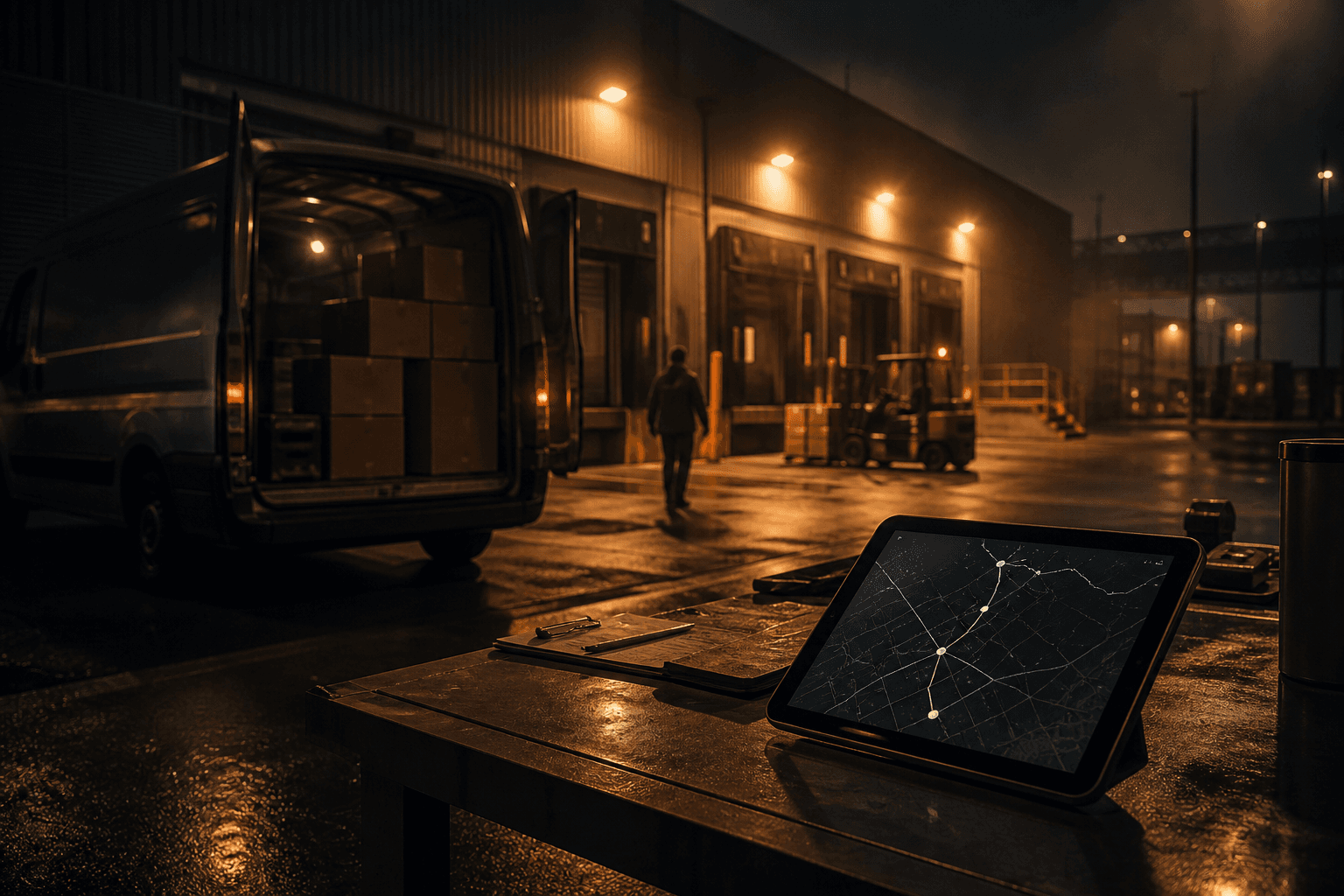
Context
What usually breaks
- Dispatch and routing rely on spreadsheets and phone calls
- Customers and internal teams lack live status on jobs or deliveries
- Proof of delivery and exceptions are tracked in disconnected tools
- Scaling volume means hiring more coordinators instead of fixing the process
Delivery
What we typically build
- Job booking, dispatch boards, and driver or carrier workflows
- Tracking pages and automated customer notifications
- Exception handling, POD capture, and billing triggers
- API links between TMS, WMS, CRM, and finance tools
Outcomes
What changes
- Clear status from booking through completion
- Less coordinator time spent chasing updates
- Fewer missed handoffs between warehouse, transport, and accounts
- Reporting on SLA, utilisation, and bottlenecks
Method
Our approach
- 01
Map the network
We document how jobs move from booking to proof of delivery — where coordinators lose time and customers lack visibility.
- 02
Design the system
One architecture for web, software, automation, and data — scoped to what moves the needle first.
- 03
Build & connect
We ship in production-ready phases and wire your existing tools instead of replacing everything at once.
- 04
Improve after launch
We monitor, fix, and extend as volume and complexity grow — you are not left at handover.
Connected
Related services
FAQ
Common questions
We are not a huge 3PL — is this still relevant?
Especially then. Smaller operators feel manual coordination pain first; we scope systems that remove that friction without enterprise complexity.
Next step
Discuss your logistics programme
Discuss a project — we map constraints and recommend a phased programme, with published evidence where it applies.